In development · not yet released
The traditional Roman liturgy
Pray with the Church, hour by hour.
Orate brings the Divine Office, the Holy Mass, the Church’s prayers and a daily meditation into one quiet book, in Latin and English, ordered by the traditional calendar and the rubrics of 1960.
Orate isn’t available to download yet. It’s being built now, and your support on Patreon helps bring it to release.
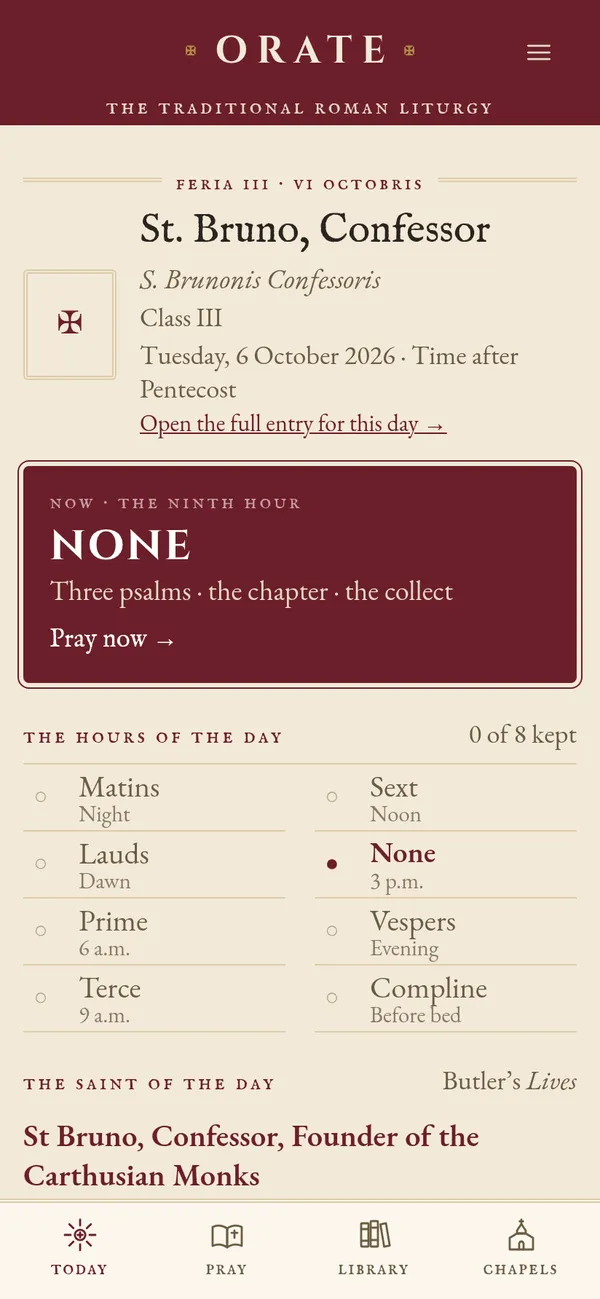
Hodie · Today
Every day is its own.
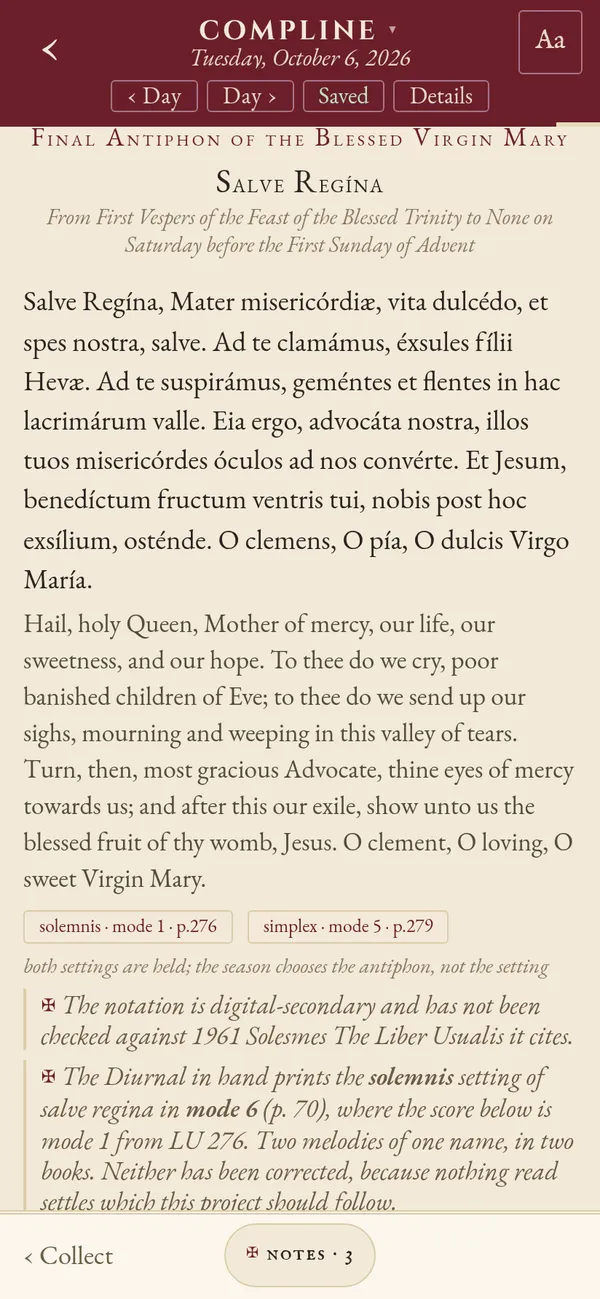
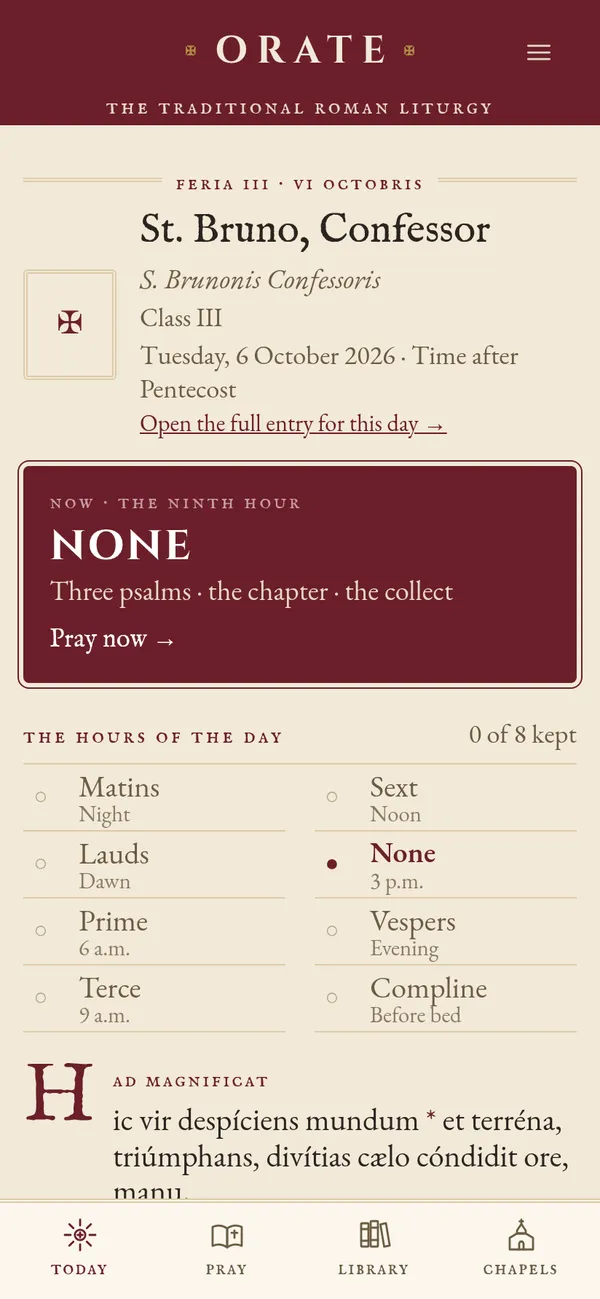
Orate opens on today, and tells you what the Church keeps: the feast or feria, its class, the season and the colour. Then it shows you which Hour it is now, and offers to pray it with you.
- The Hour that is now. Matins through Compline, set against the traditional reckoning of the hours, with one tap to begin.
- The saint of the day. A life from Butler’s Lives of the Saints, and Dom Guéranger’s reading for the day.
- The rest of the day’s rule. Morning prayers, the three Angelus bells, the day’s Mass, the Rosary with that day’s mysteries, and an examination of conscience before bed.
- Keep count, privately. Tick off what you have kept. Ticks stay on your device and clear each day.
“Times follow the traditional reckoning of the hours and are a guide, not an obligation.” — from the Today screen
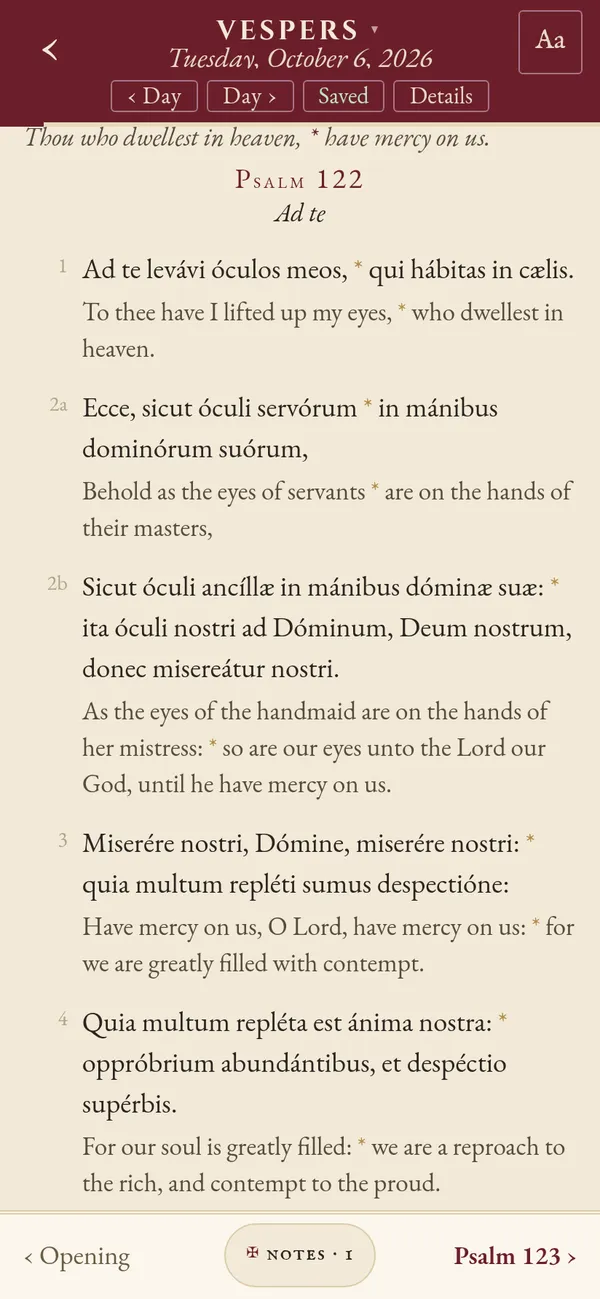
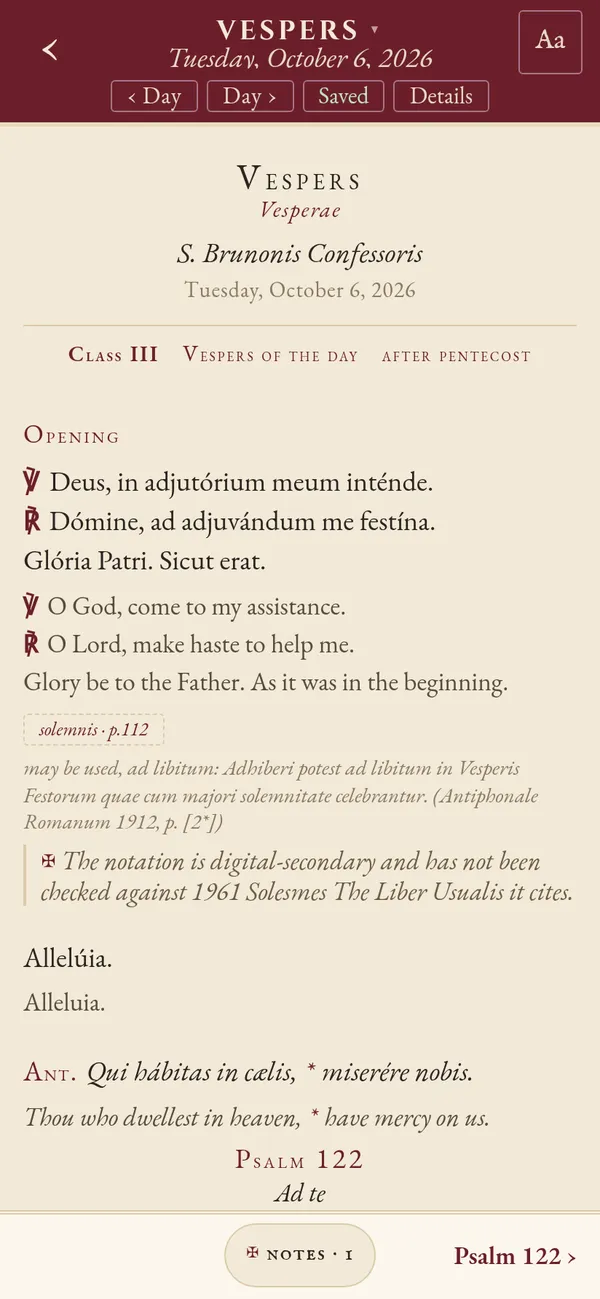
Officium divinum · The Divine Office
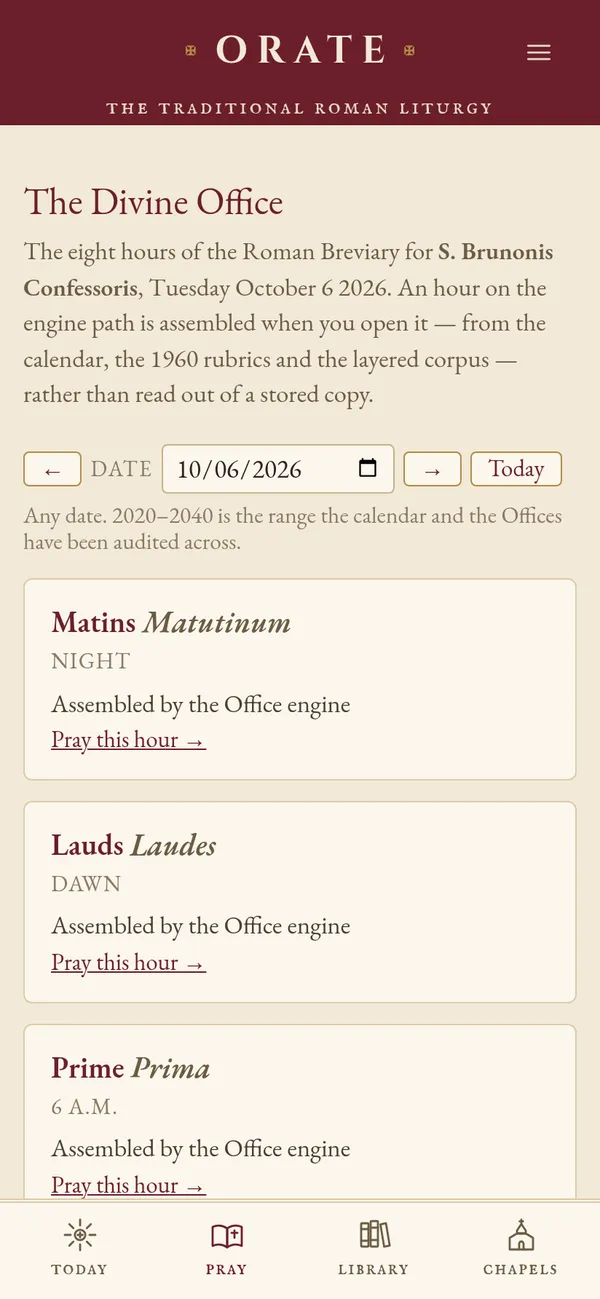
The eight Hours of the Roman Breviary.
Matins, Lauds, Prime, Terce, Sext, None, Vespers and Compline. Orate doesn’t keep a stored copy of each day. It assembles each Hour when you open it, from the calendar, the 1960 rubrics and its library of texts, so the right psalms, antiphons, chapter and collect fall into place for the day.
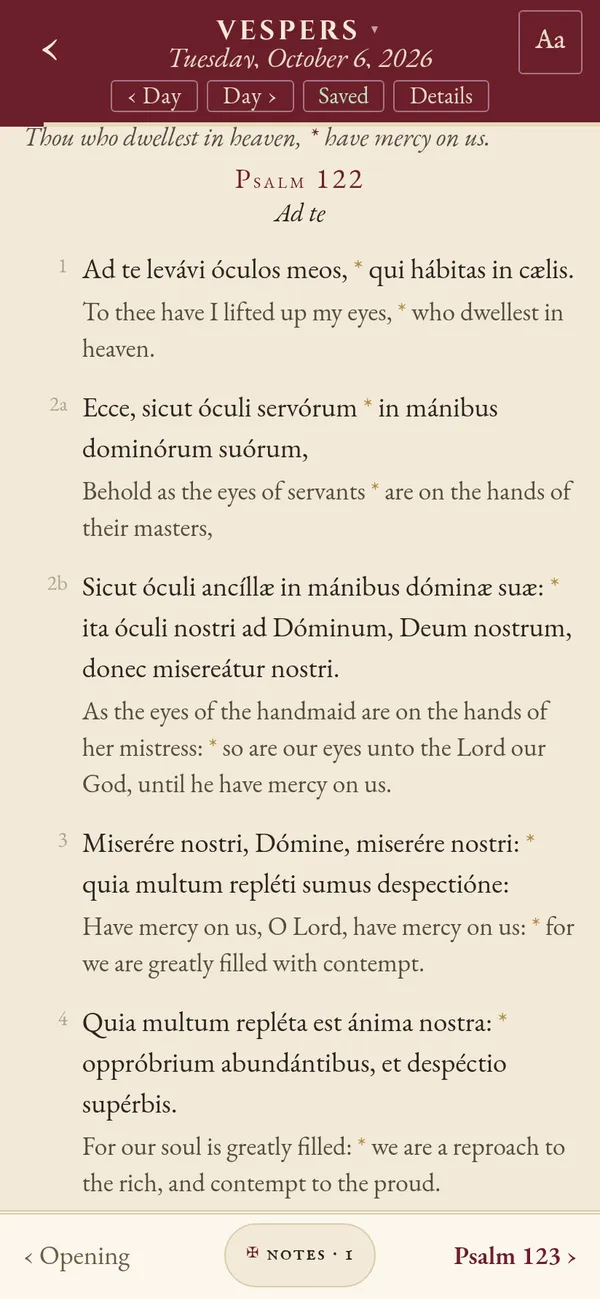
- Latin and English together. Each verse in Latin, with the English set beneath it. Or choose Latin only, or English only.
- The psalms to their tones. Psalm chant drawn on the page, with the Marian antiphons in solemn or simple tone.
- Any day you choose. Step back and forward through the days. The calendar and Offices have been checked across 2020 to 2040.
- The weekday cursus. Pray the ferial Office of any weekday, as it stands before a feast displaces it.
Ordo Missæ · The Holy Mass
Follow the Mass, part by part.
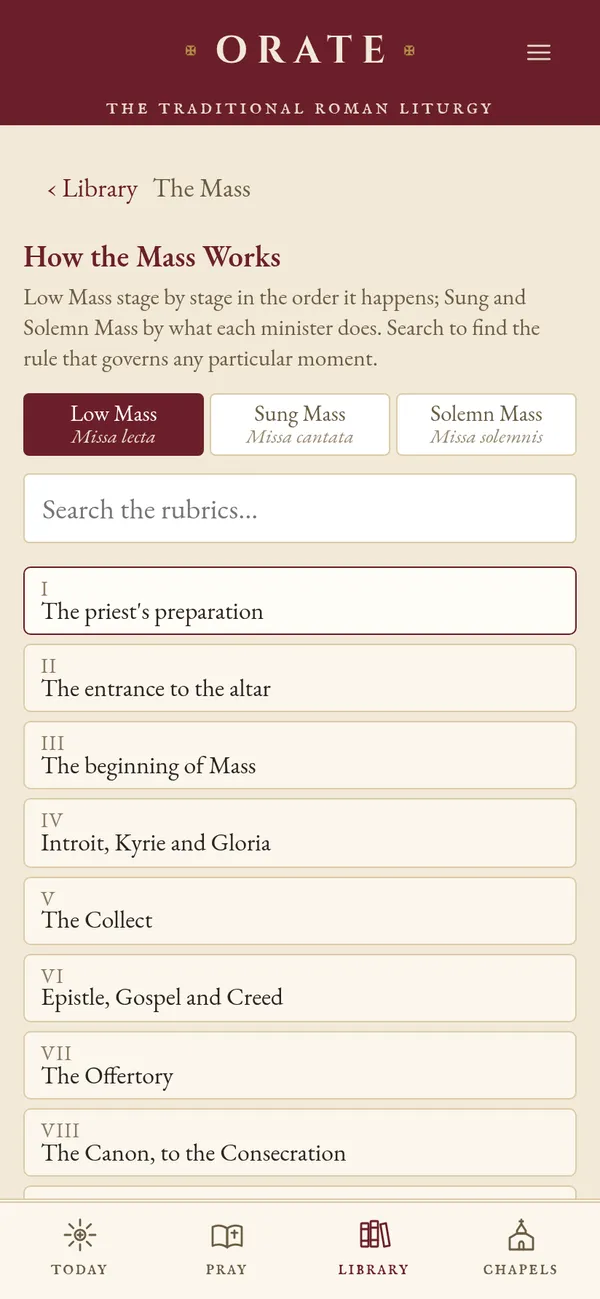
How the Mass Works takes you through the Holy Sacrifice in order, from the priest’s preparation and the entrance to the altar, through the Offertory and the Canon, to the blessing and the Last Gospel. It follows the rubrics of the 1962 Roman Missal.
- Low, Sung and Solemn Mass. Switch between the three forms and see how each differs.
- Search the rubrics. Find any moment of the Mass by name.
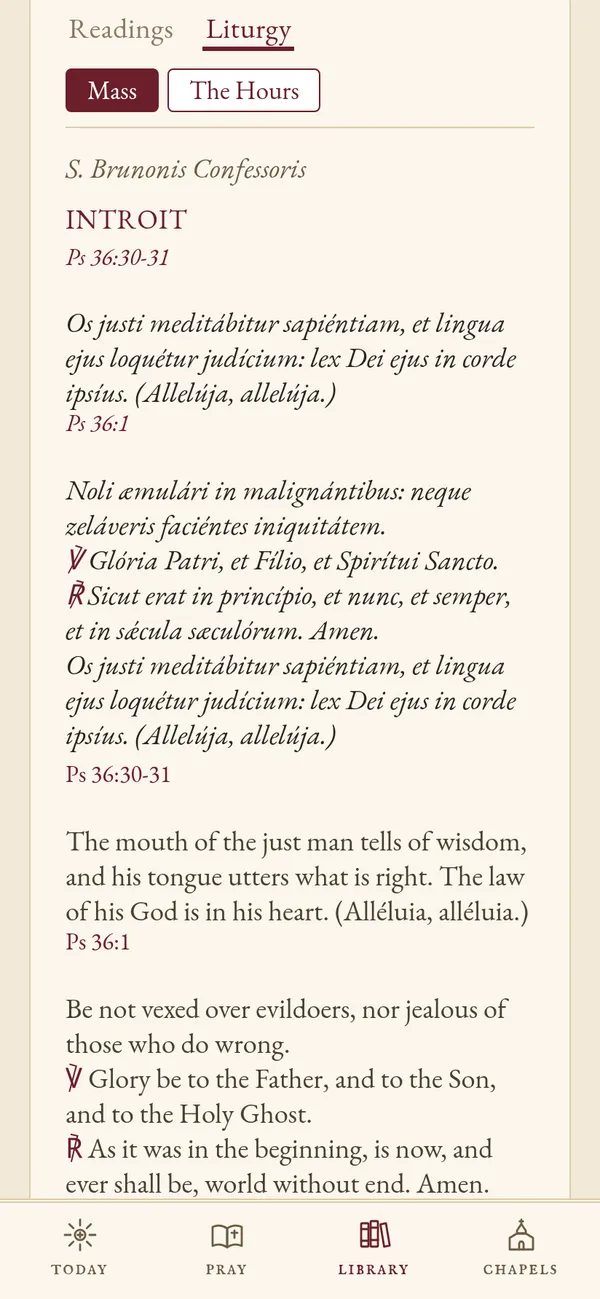
- The day’s own propers. From the Today screen, open the day’s Mass, from the Introit onward, in Latin and English.
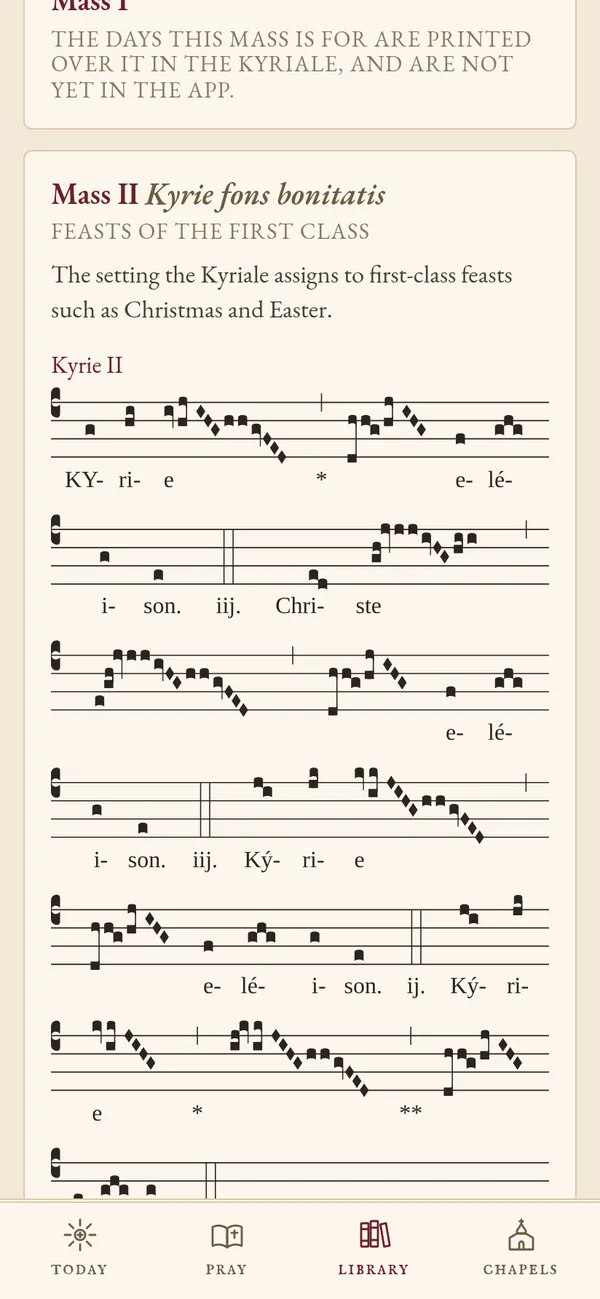
- The Kyriale. The sung Ordinary, six Masses and four Credos, in square notation. Each day’s Mass tab names the setting it uses.
Preces · Prayers & devotions
The Church’s prayers, gathered in one place.
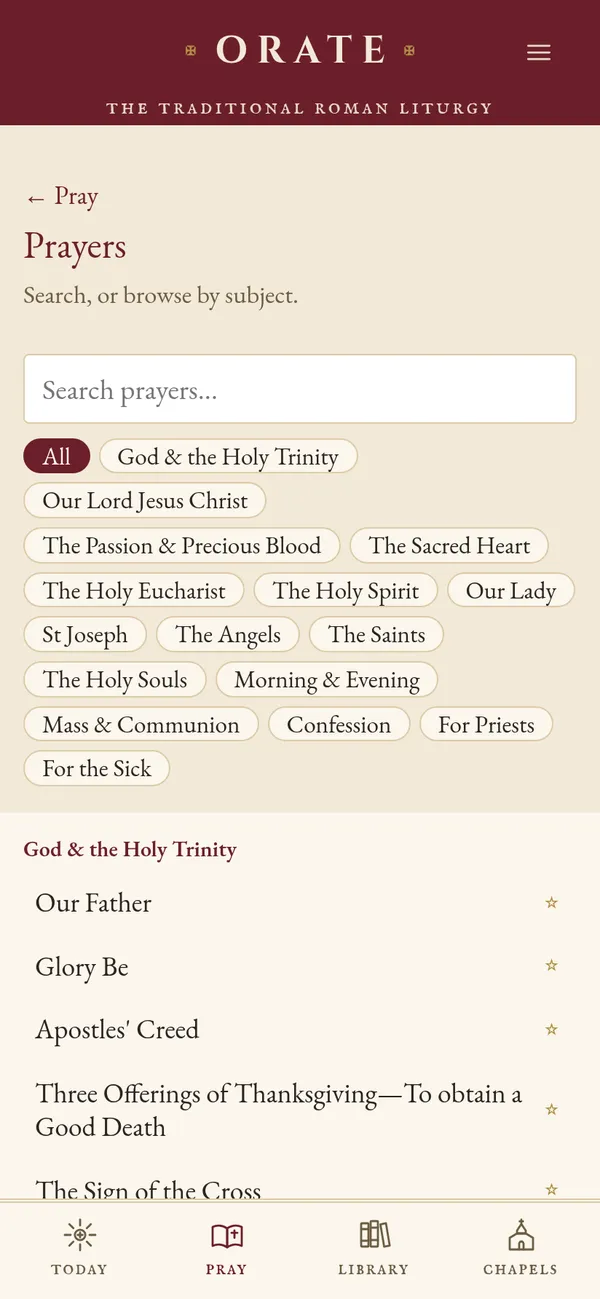
Search the prayers by name, or browse them by subject: God and the Holy Trinity, Our Lord, the Passion, the Holy Eucharist, the Sacred Heart, Our Lady, St. Joseph, the angels and saints, the Holy Souls, prayers for morning and evening, for Mass and Communion, for confession and for the sick.
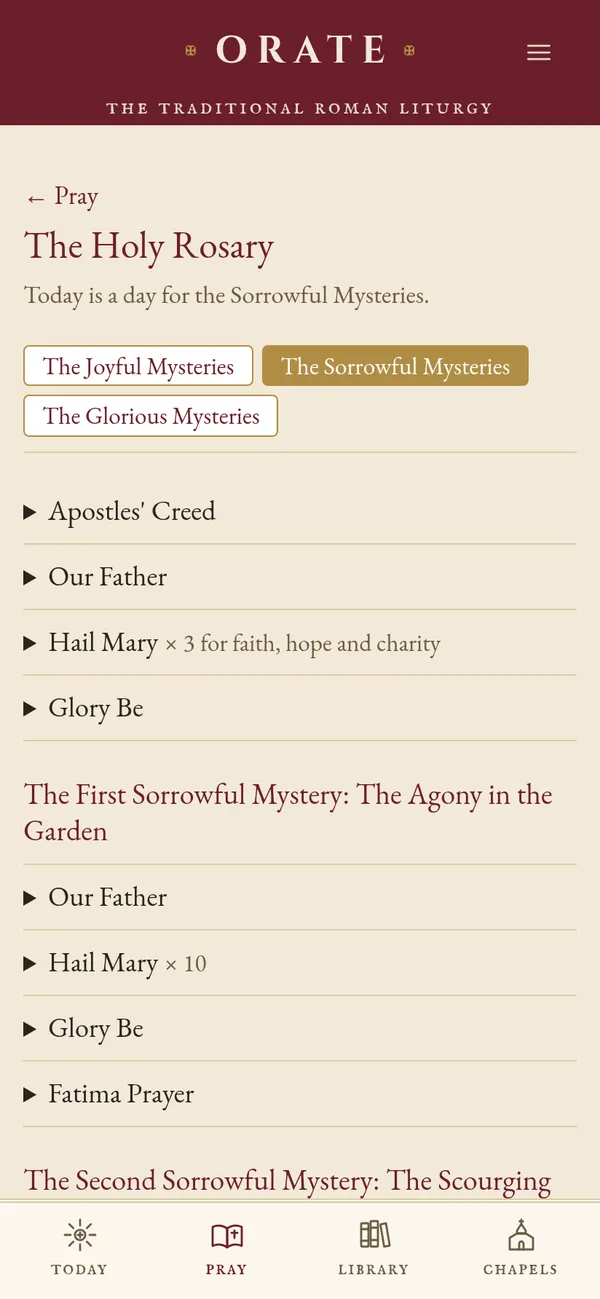
The Holy Rosary is laid out bead by bead, with the mysteries for the day already chosen.
Meditationes · Meditation & reading
A meditation for every day.
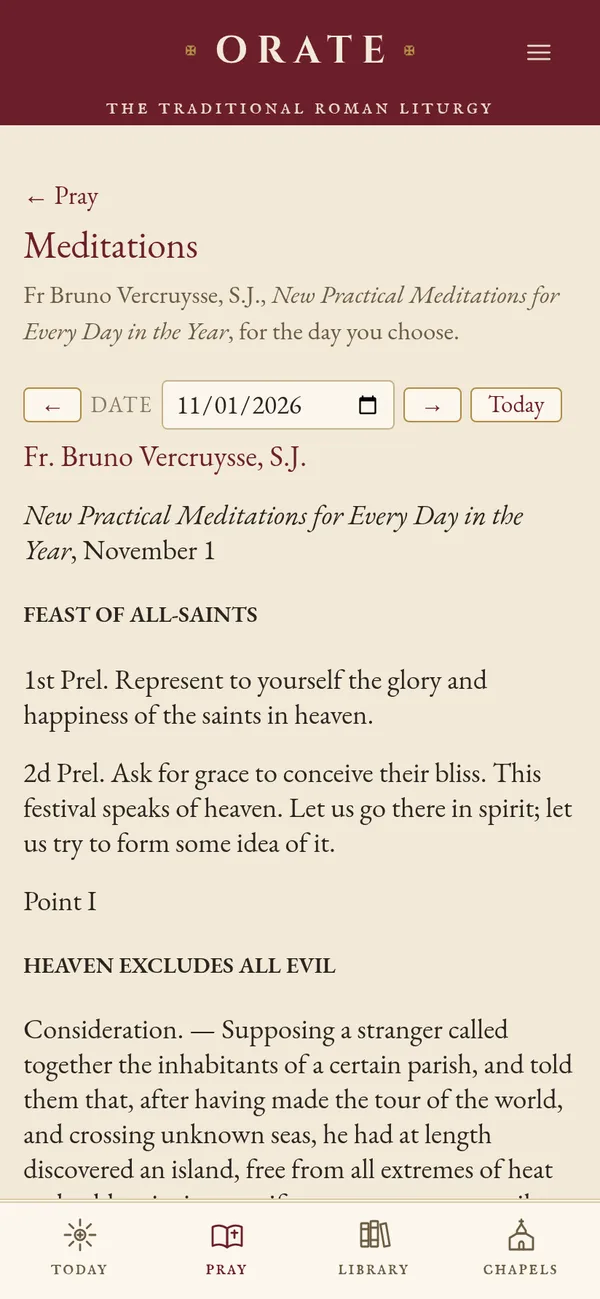
Each day brings its meditation from Fr. Bruno Vercruysse, S.J., New Practical Meditations for Every Day in the Year: the preludes, the points to consider, the affections and a resolution to carry through the day.
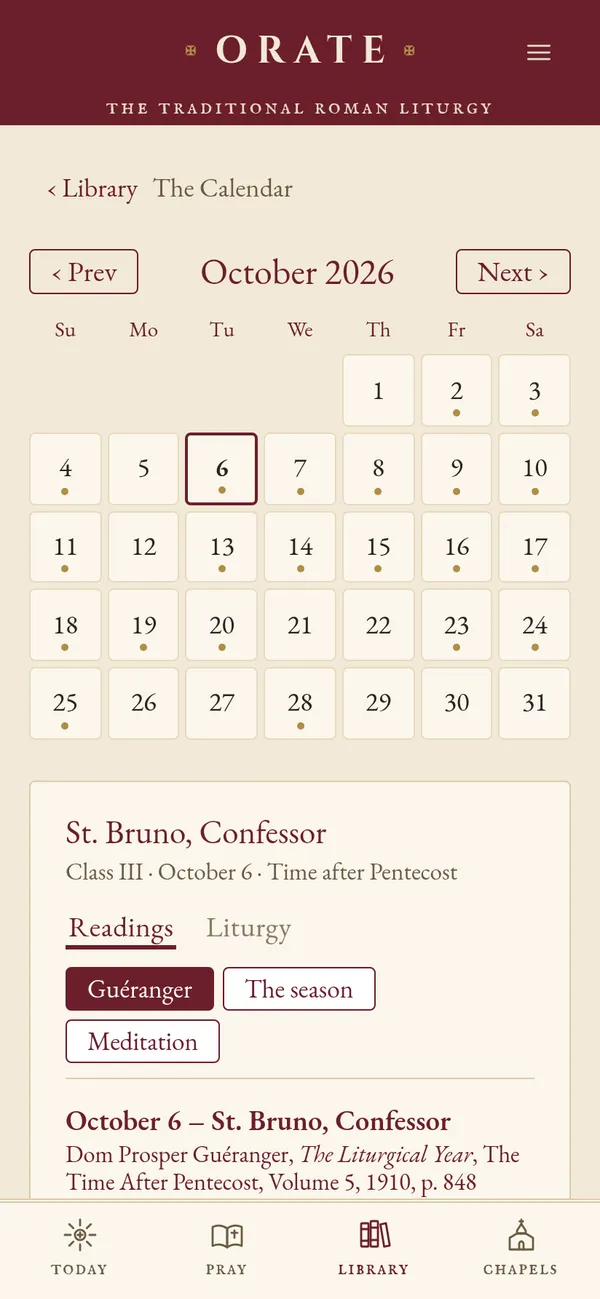
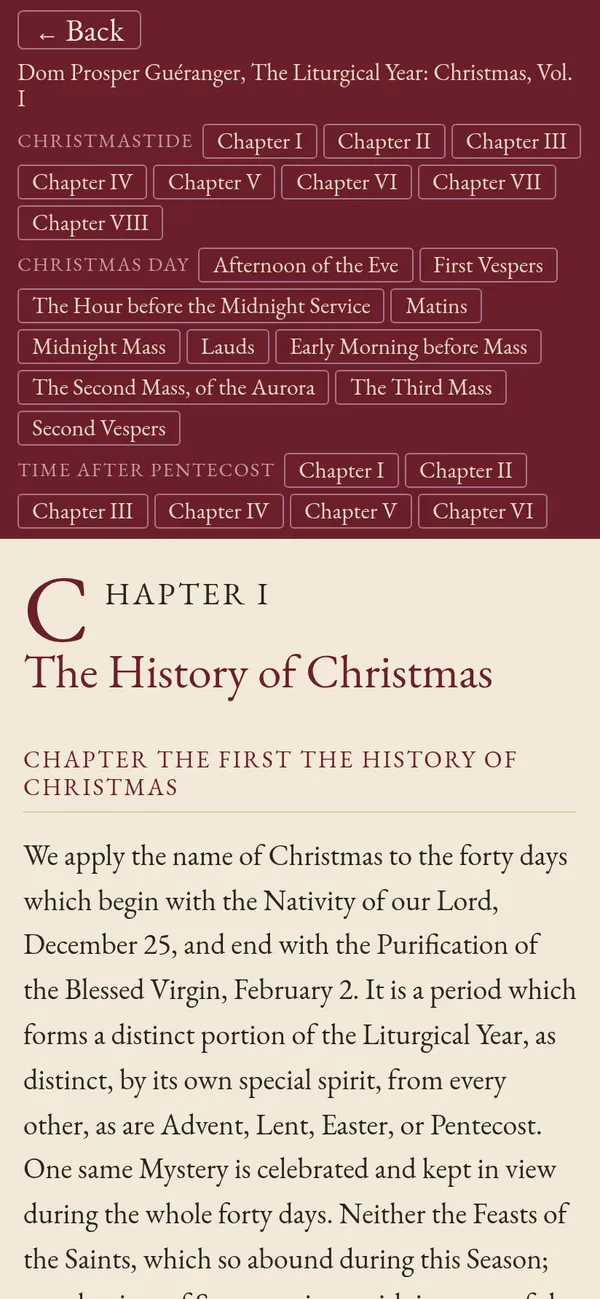
- Dom Guéranger, The Liturgical Year. His readings on the seasons and feasts, set beside the day they belong to.
- The Psalter. All 150 psalms and the canticles, Latin and English, searchable by number, Latin name or English.
- The Calendar. Every day of the year, with its rank, its season and its colour.
How it works
Made to help you pray.
Orate is still in development. This is how it works in the version being built now. Features may change before release.
See the day
The Today tab names the feast or feria, its class and season, and the Hour it is now.
Pray the Hour
Tap Pray now. The Hour opens in Latin and English with its psalms, antiphons and chant. Move through it section by section.
Keep the day’s rule
The Angelus, the day’s Mass, the Rosary and an examination of conscience, ticked off privately as you keep them.
Take it with you
The calendar, the Office and the Mass work without a signal. Download extra psalm chant, readings and scores only if you want them.
Assembled, not copied
Each Hour is put together the moment you open it. Orate works out which celebration the rubrics of 1960 give the day, and builds the Office from that. When a text is missing from its sources, Orate marks the gap instead of filling it with something invented.
Set it up the way you pray
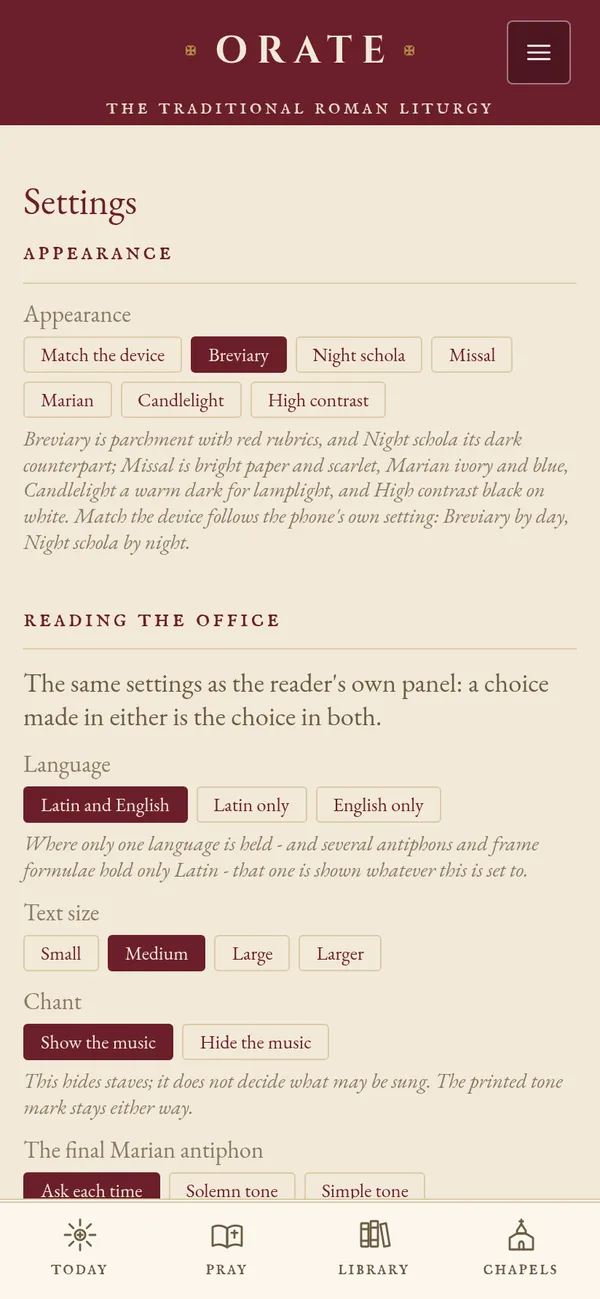
- Language: Latin and English, Latin only, or English only.
- Text size: four sizes, from small to larger.
- Chant: show the music or hide the staves. The printed tone mark stays either way.
- Downloads: choose what to keep on your device: the Psalter and its eight Gregorian tones, Guéranger, Butler’s Lives, the Raccolta and chant scores. Nothing downloads unless you ask.
Ways to read
A book for every light.
Read the Office by morning window or evening lamp. Choose the theme that suits the light you pray by.
Breviary
Parchment with red rubrics, like the pages of a printed breviary.
Change themes any time under Settings. Your choice is remembered on that device.
Where the texts come from
Faithful to the books.
Orate is built on the liturgical books and the classic devotional works. It tells you plainly where its texts come from.
The Breviary
The Latin of the Roman Breviary as published by Divinum Officium, with the English beside it. The Offices follow the calendar and rubrics of 1960.
The chant
Psalm tones and Gregorian notation drawn from open transcriptions. Where notation hasn’t yet been checked against the printed book, the app says so.
The classics
Dom Prosper Guéranger’s The Liturgical Year, Butler’s Lives of the Saints, the Raccolta and Fr. Vercruysse’s Meditations.
Orate · Pray
“Seven times a day I have given praise to thee.”
Psalm 118:164
Orate is still being built. If you’d like to see it finished, you can support the work on Patreon.